
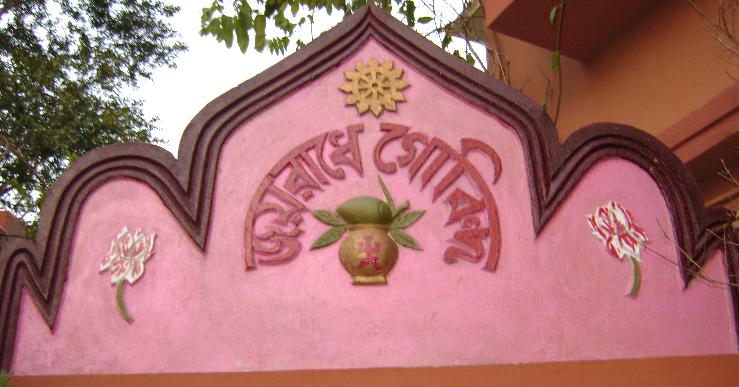
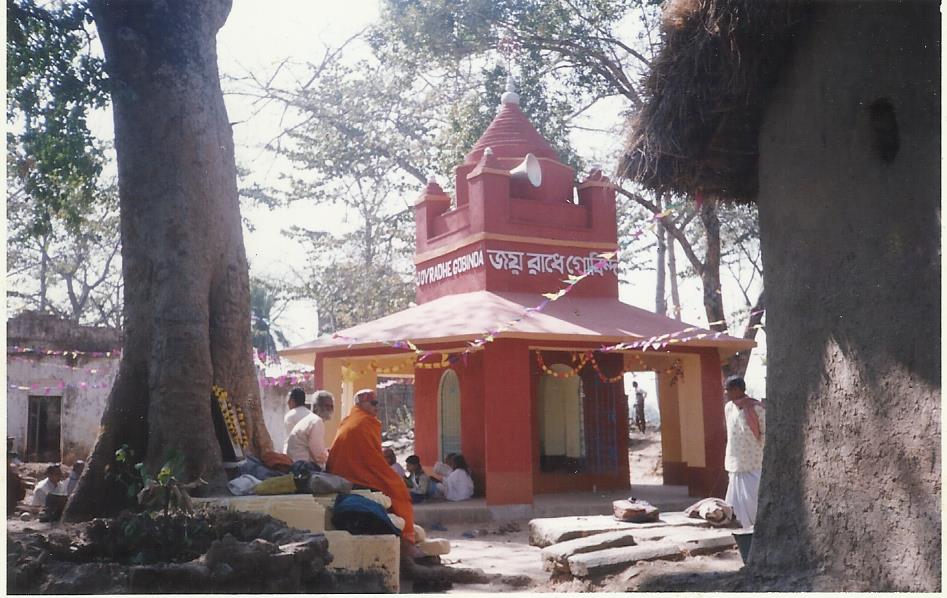
Jai Radhey Govinda
 |
 |
 |
 |
JAI RADHEY GOVINDA is the all-pervasive Lord who expands into everything. He is the maintainer of the universe and the complete cosmic creation. He is the Para Brahman & Parama Brahman. The ultimate Lord of the Universe, the absolute truth. Terms like Parameshvara, Ishvara, Bhagavan, Brahman, and Paramatma are held to be synonymous with ParaBrahman.
Jai Radhey Govinda is synonymous with Para Brahman (Sanskrit) [from para beyond + Brahman (neuter) universal self or spirit] - That which is beyond Brahman. The self-enduring, eternal, self-sufficient cause of all causes, the essence of everything in the cosmos. In the Vedic style of writing, ParaBrahman is referred to as tat (that) as opposed to the manifest universe called idam (this). ParaBrahman means Supreme Brahman, or Supreme Cosmic Spirit, or Godhead. Although an ineffable entity, it could be said to be that which contains and pervades the universe. ParaBrahman, from beyond, encompasses the transcendent and immanent ultimate reality, Brahman. The Absolute Truth is both subject and object, so there is no qualitative difference.
Para Brahman or Parama Brahman (the Highest Brahman; not to be confused with Brahmin, as in Indian caste system) is a term often used by Vedantic philosophers as to the "attainment of the ultimate goal". Adi Shankara has said that there is only one Supreme Para-Brahman and all the other deities are the forms and expansions of this Para-Brahman. It is believed that all Vaishnava and other schools attribute Personhood to this concept, as in Svayam bhagavan. Under terms of some schools of Vedanta, It has three modal aspects with a highest as Para Brahman or Jai Radhey Govinda. Even Shankara in his commentaries on Yoga Sutras stated, "Through AUM the Lord is met face to face", and "AUM is the Name of the Supreme Lord"(Sabda). One of the most prominent of recent Hindu philosophers, Dr. Radhakrishnan, after his alleged conversion to Gaudiya Vaishnavism in early 1960s, confirmed that this term meant Supreme God as a Person, the Absolute Truth.
Learned transcendentalists who know the Absolute Truth call this nondual substance Brahman, Paramatma or Bhagavan." (Bhagavata Purana 1.2.11 vadanti tat tattva-vidas tattvam, yaj jnanam advayam brahmeti paramatmeti, bhagavan iti sabdyate)
Whoever realizes the Supreme Brahman attains to supreme felicity. That Supreme Brahman is Eternal Truth (satyam), Omniscient (jnanam), and Infinite (anantam). (Taittiriya Upanishad 2.1.1 brahma-vid apnoti param, tad eshabhyukta, satyam jnanam anantam brahma)
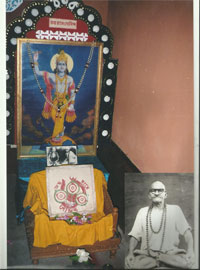
Upanishads further mention often that the Supreme Brahman is Eternal, Conscious, and Blissful (sat-chit-ânanda). The One is Bliss. Whoever perceives the Blissful One, the reservoir of pleasure, becomes blissful forever. (Taittiriya Upanishad 2.7.1-2 raso vai sa, rasam hy evayam labdhvanandi bhavati).On “JAI RADHEY GOVINDA” Bhakta Baba reiterated to his devotees: “Please ensure that you never forget this invaluable name even during bathing or going to the toilet, let this be your only trusted companion of all time”
